Hybrid AI Operating System
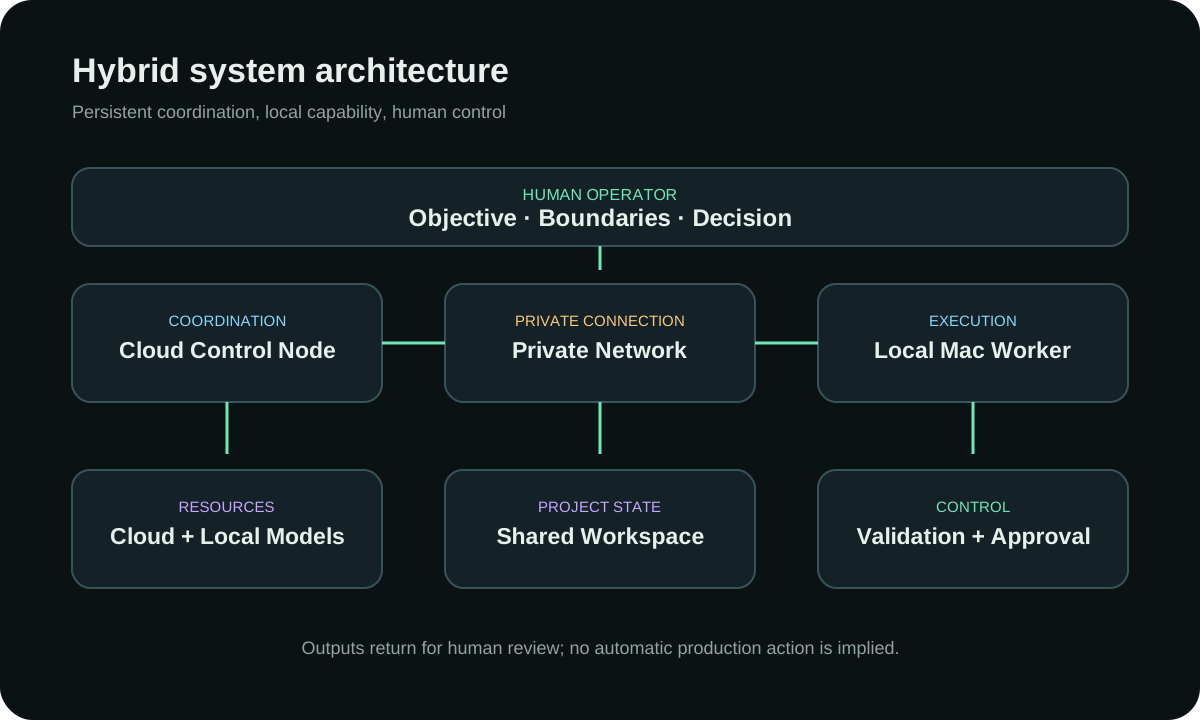
A supervised cloud-and-local AI system built around task boundaries, model routing, validation, reporting, and human approval.
Christian’s role: Designed, directed, validated, and operates the system.
Read case study →Selected Work
I study how people work, find where friction, risk, and handoffs break down, and design supervised AI systems that make the process clearer and more repeatable while keeping people in control.
Each case study separates verified implementation evidence from limitations and makes Christian’s role—and AI’s contribution—explicit.
A supervised cloud-and-local AI system built around task boundaries, model routing, validation, reporting, and human approval.
Christian’s role: Designed, directed, validated, and operates the system.
Read case study →
A locally validated review environment for examining sensitive workflow scenarios without sending or writing to live systems.
Christian’s role: Defined the problem, review decisions, safety constraints, and evidence standard.
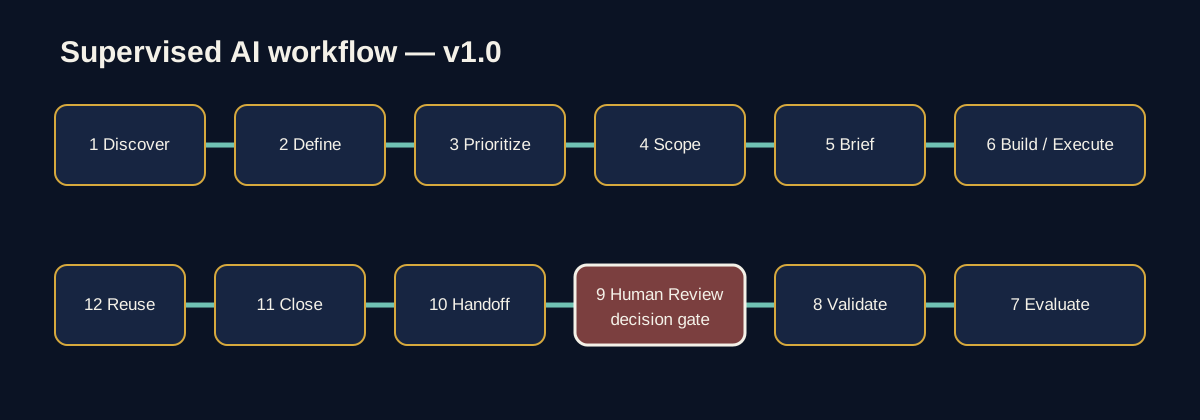
Read case study →A versioned framework for moving AI-assisted work from discovery and scope through validation, handoff, and closure.
Christian’s role: Defined objectives, boundaries, acceptance, approvals, validation, and handoffs.
Read case study →
A scroll-directed editorial portrait of Elgin with reversible scene orchestration, responsive art direction, and accessible exploration.
Christian’s role: Directed the product, narrative, design, AI-assisted implementation, and validation.
Read case study →
A four-stop guided 3D civic story with source context, user-directed navigation, accuracy limits, and a map-free fallback.
Christian’s role: Defined scope, directed implementation, reviewed revisions, and accepted the prototype.
Read case study →What this work demonstrates
Study current work, distinguish evidence from assumption, and define the real problem before choosing a tool.
Connect architecture, user decisions, operating constraints, and handoffs into one understandable system.
Direct implementation with explicit scope, source, permission, and contribution boundaries.
Keep sensitive, external, destructive, and public actions behind meaningful review gates.
Test outputs and system behavior, expose uncertainty, and distinguish implementation from proof.
Preserve decisions, limitations, recovery paths, ownership, and next actions.