Problem
AI-assisted work crossed providers, machines, sessions, and project folders, making context and permitted actions harder to review.
A supervised cloud-and-local operating layer for repeatable AI-assisted project execution, validation, reporting, and human-controlled decisions.
Project at a glance
AI-assisted work crossed providers, machines, sessions, and project folders, making context and permitted actions harder to review.
Defined the hybrid architecture and approval boundaries; directed implementation, validated the system, and operates it internally.
AI systems, agents, scripts, models, and frameworks assisted bounded analysis, drafts, diagnosis, tests, and documentation under supervision.
Internal operating evidence reviewed across 62 distinct activity dates, with explicit model routes, local/cloud roles, validation reports, and a human approval gate.
Internal system only. Regular use, not uninterrupted daily activity. Context migration is incomplete, cost telemetry is uneven, and private details limit reproduction.
The problem
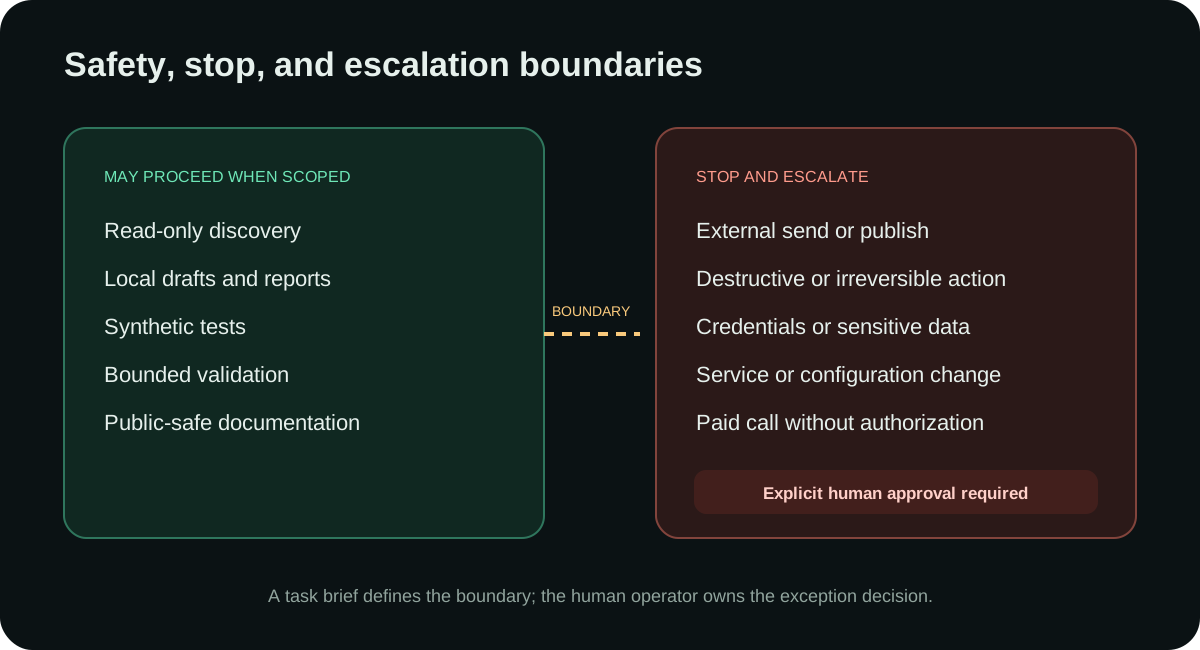
One chatbot or execution environment could not reliably preserve context across models, machines, sessions, and project folders. Broad permissions also made it harder to see what an AI system was allowed to do and when Christian needed to decide.
Preserve project context and accountability without binding every task to one provider or machine—and without granting blanket autonomy.
What Christian designed
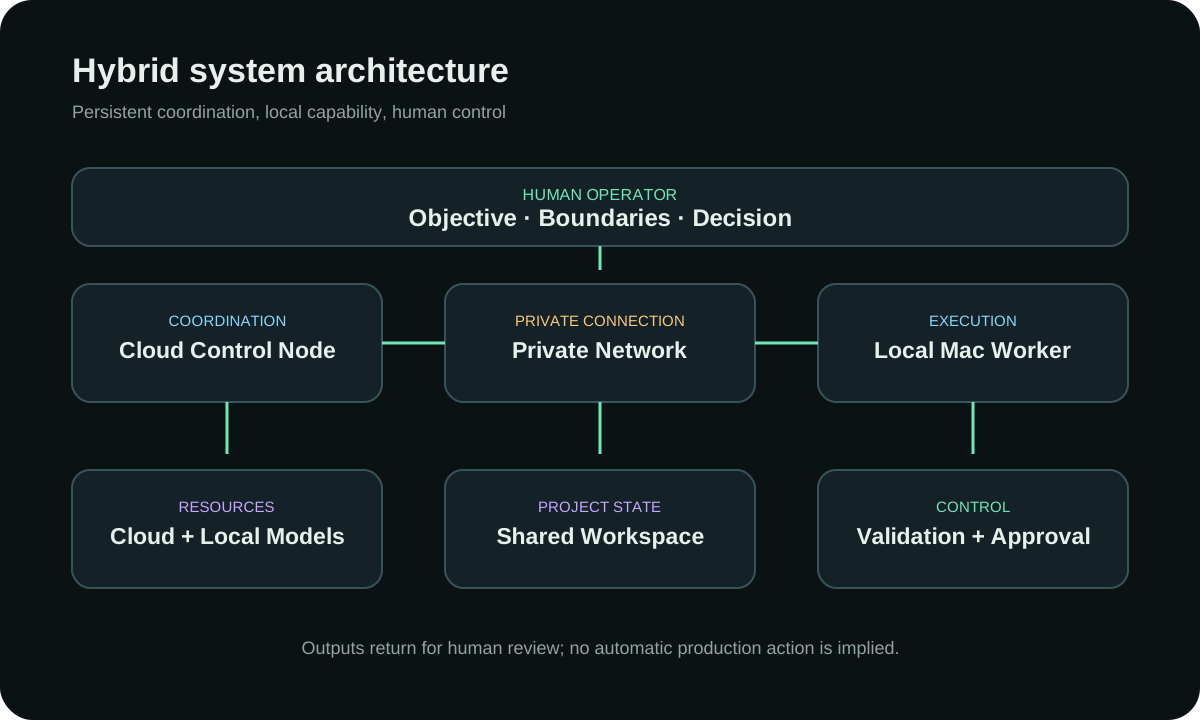
Christian defined a persistent cloud control node, a local Mac worker, private connectivity, project-local sources of truth, explicit model routes, scoped task briefs, validation reports, status handoffs, rollback plans, and human decision gates.
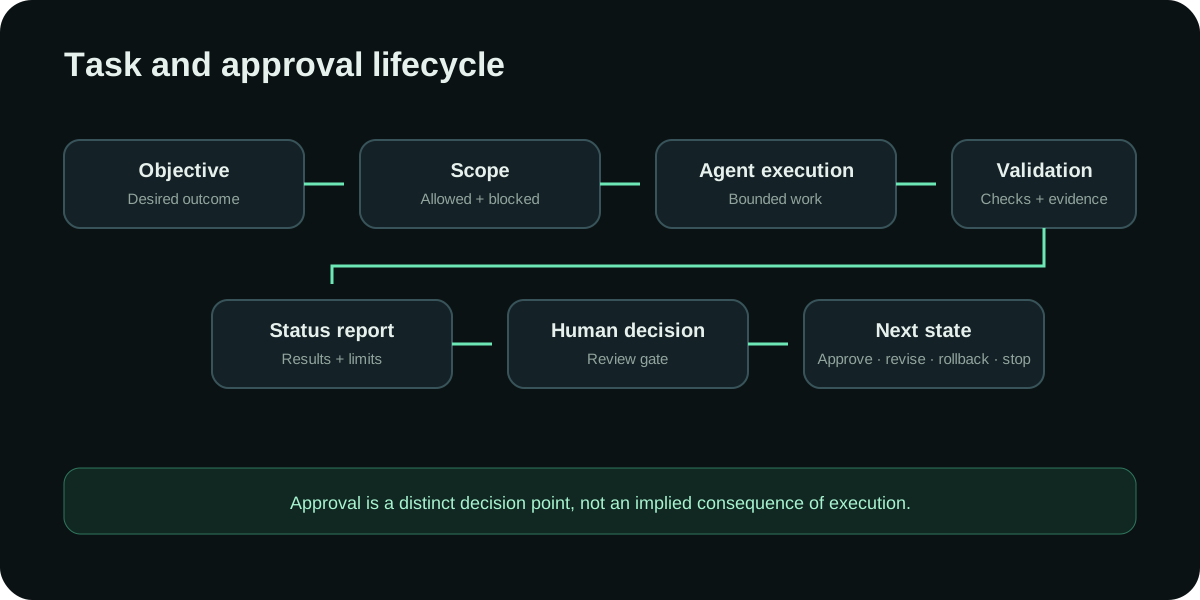
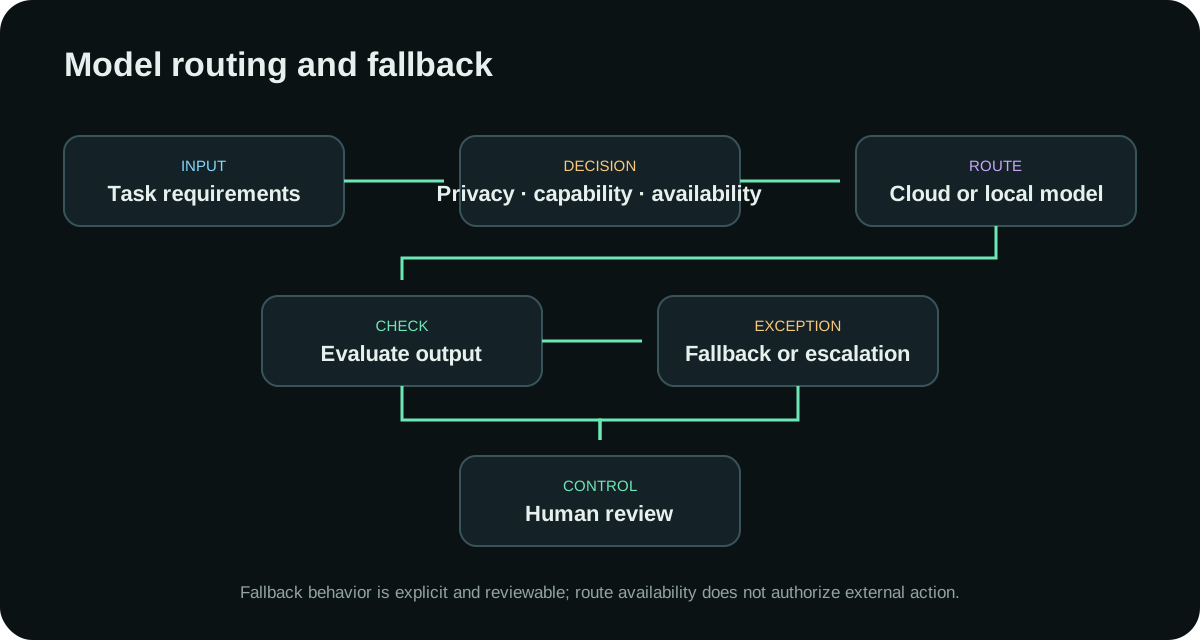
A human frames the objective and boundaries. Supervised orchestration loads approved context, selects a cloud or local route, performs only allowed work, validates results, and returns a report. Christian approves, revises, rolls back, or stops.
Contribution
Christian identified the need, established goals and no-send boundaries, selected or approved architecture and model-routing decisions, directed AI-assisted implementation, reviewed revisions, diagnosed system-level issues, validated outcomes, and operates the system.
AI and tools
AI systems, agents, scripts, models, and frameworks supported bounded analysis, configuration and implementation drafts, failure diagnosis, tests, documentation, reports, and approved changes under Christian’s supervision.
Evidence and validation
The evidence audit found activity artifacts across 62 distinct dates from June 1 through August 2, plus service, repository, staged-upgrade, backup, validation, and rollback records. The supported use classification is regular, ongoing internal use.
Internal system only. Use is regular and ongoing, not uninterrupted daily activity. Model routes evolve. Project-context migration is incomplete, per-task cost telemetry is not uniform, and public sanitization prevents independent reproduction of the private environment.
Written permissions make human control legible; project files are more durable than chat history; model fallback is a product and risk choice; and rollback evidence makes AI-assisted changes easier to review.
Complete project-context migration and standardize per-task observability while preserving the current approval and privacy boundaries.