Problem
Scope, sources, approvals, evaluation, and handoff can become hard to review when AI-assisted work is documented in disconnected places.
A versioned, documentation-first operating model for supervising AI-assisted project delivery from discovery and scope through implementation, evaluation, validation, human review, rollback, handoff, and closure.
Project at a glance
Scope, sources, approvals, evaluation, and handoff can become hard to review when AI-assisted work is documented in disconnected places.
Defined the lifecycle, stage boundaries, acceptance criteria, review owners, stop conditions, and handoffs.
AI tools helped draft artifacts, implement the validator and preview, and run bounded validation under Christian’s direction.
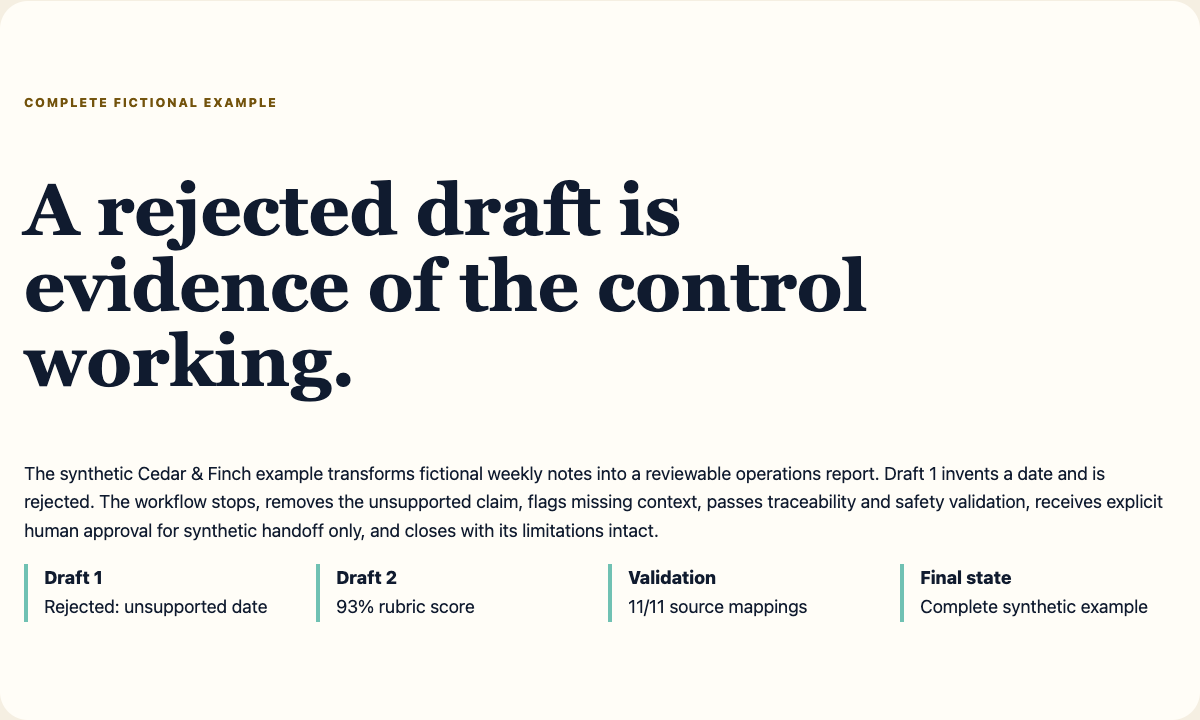
21 templates, 19 synthetic example artifacts, 11/11 traceability checks, and a 93% project-level evaluation for the fictional example—not model accuracy.
Documentation and local evidence, not orchestration software. Synthetic example; no client or production use, ROI claim, or formal WCAG certification.
The problem
When scope, sources, permissions, evaluation, technical validation, and approval live in different places, a polished output can hide missing evidence or unclear authority.
Create one lifecycle that makes intent, evidence, risk, decisions, contribution, ownership, rollback, and completion observable.
What Christian designed
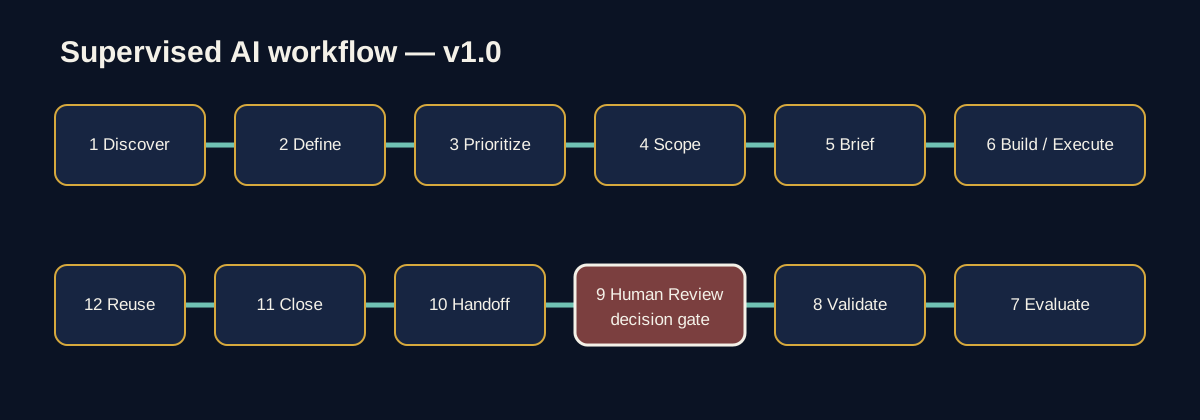
The model defines discovery, problem definition, prioritization, scope, execution briefs, bounded building, output evaluation, technical validation, accountable human review, handoff, closure, and governed pattern reuse.
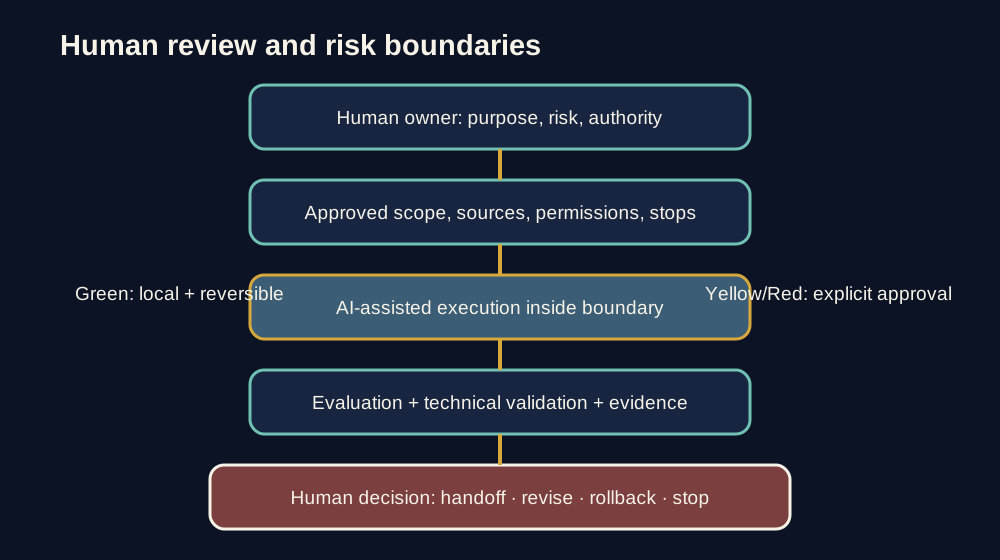
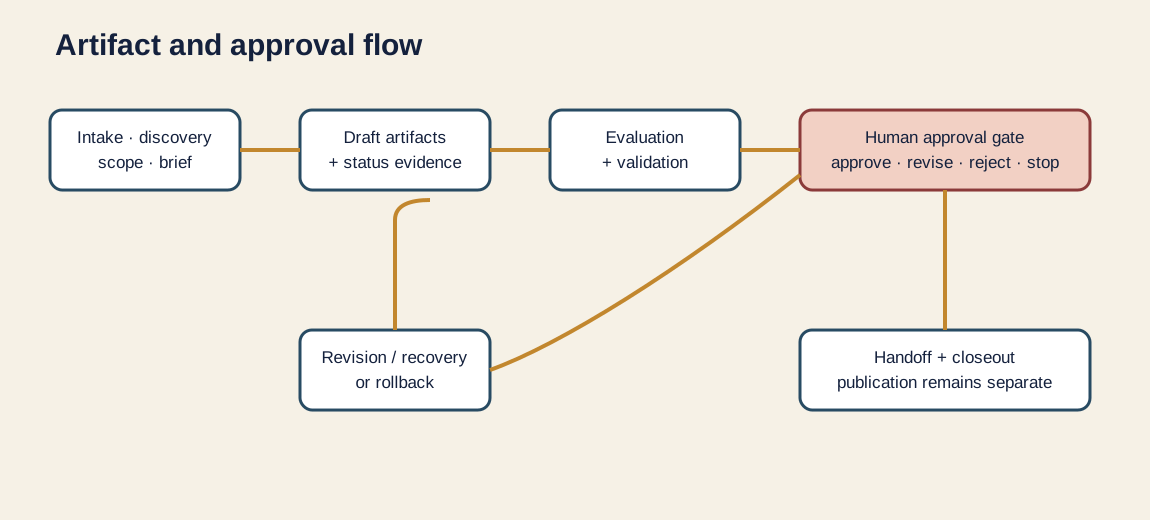
Each stage has inputs, required activities, outputs, approval owners, stop conditions, and an exit handoff. Sensitive, external, destructive, irreversible, or public actions require explicit human approval.
Contribution
Christian identified workflow friction, defined objectives and operating boundaries, established acceptance criteria, directed AI-assisted implementation, reviewed outputs, requested revisions, diagnosed system-level failures, made scope and approval decisions, validated outcomes, and directed handoffs.
AI and tools
AI tools consolidated verified patterns, drafted standardized artifacts, implemented the validator and preview, and executed bounded validation under Christian’s direction. The model records human and AI contribution separately.
Evidence and validation
The 93% figure is the synthetic example’s final project-level evaluation—not a model-accuracy score or scientific benchmark.
The automated operating-model validator passed, including 3/3 validator tests. Chrome acceptance checks at desktop, tablet, and mobile widths found no console errors, failed resources, horizontal overflow, or unexpected external destinations. These checks are not formal WCAG certification.
This is documentation and local evidence, not orchestration software. The example is synthetic. There is no production-use, client-use, adoption, certification, or ROI claim. Automated scans are bounded, browser review is not formal WCAG certification, and historical projects did not uniformly follow version 1.0.
Teams can review AI-assisted delivery more clearly when scope, sources, prohibited actions, evaluation, validation, approval, and handoff remain distinct but connected.
Apply the model prospectively to additional bounded internal projects, then revise only the patterns supported by recorded evidence.